Loading...
Healf Journal
Should I Put Castor Oil In My Belly Button

Verfasst von: Pippa Thackeray
Verfasst am: May 6, 2025
Rooted in Ayurveda
Navel oiling isn’t a new practice. It’s centuries-old and related to nabhi chikitsa, where the belly button is viewed as a central point of connection to internal organs. Castor oil is chosen specifically in this case for its dense texture and reputation for supporting circulation.
This means placing a few drops into your belly button before bed for the purported benefits. Many people also include it as part of a larger routine aimed at better digestion, hormonal regulation and improved sleep.
Castor oil: mechanisms of action
Ancient sources often explain the benefits of navel castor oil applications. Some Ayurvedic texts talk about something called the Pechoti gland, which is a cluster of nerve endings near the navel believed to absorb oil and influence body systems.
The growing interest in the practice of castor oil navel application is driven by results shared online and passed on within communities. Those who try it tend to report feeling more grounded, less bloated and more rested after just a few uses.
What it’s used for
People who use castor oil to apply to the belly button do so for one or more of the following reasons:
- To ease bloating: particularly in the evening or pre-menstruation
- To support regular digestion: especially in combination with gut-friendly nutrition
- To improve sleep: by building a calm and consistent nighttime routine
- To reduce cramping: when applied in the days before menstruation starts
- To support nervous system regulation: particularly in high-stress phases
How to apply castor oil in your belly button
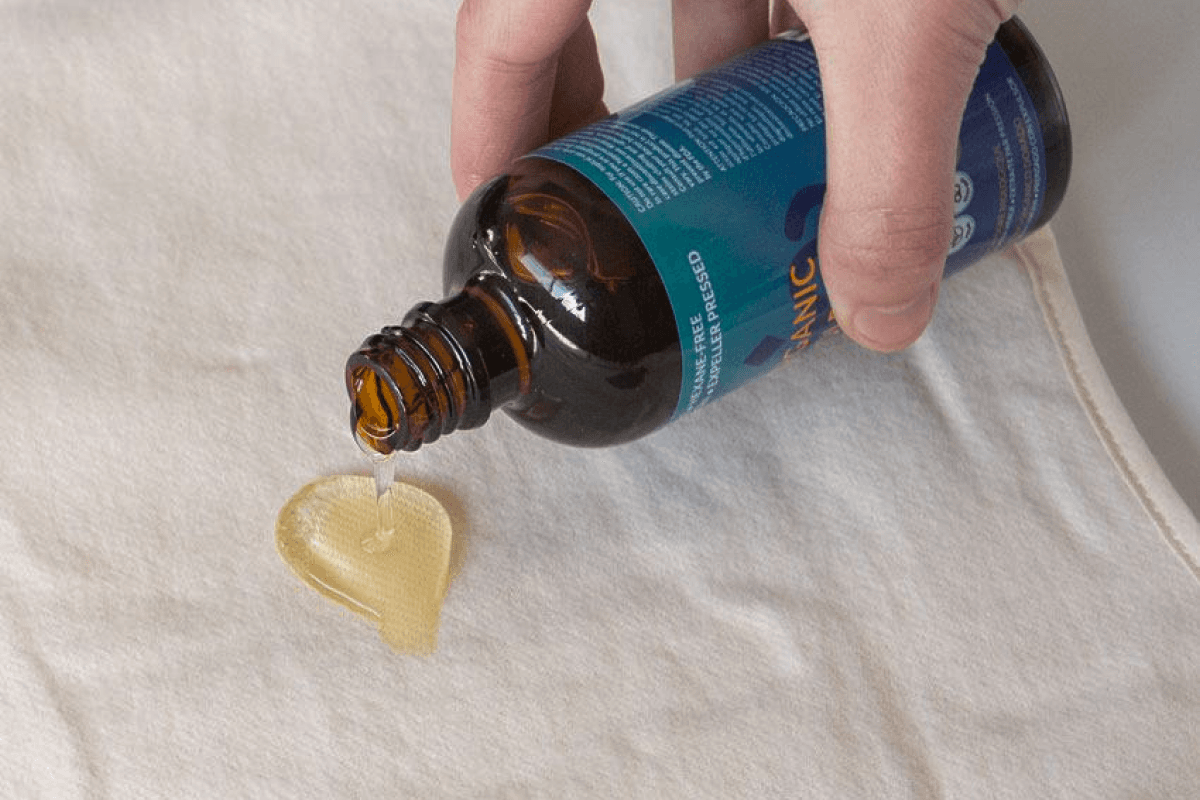
Use a cold-pressed, organic castor oil. Look for formulas that are hexane-free and made for topical use. Then follow these steps:
- Clean your belly button and surrounding skin
- Apply 2 to 3 drops of oil directly to the centre
- Massage gently for one to two minutes using circular motions
Three times a week is a great starting point, but many people may choose to do it nightly during particularly stressful periods, or in the week leading up to menstruation.
What the research says
Castor oil itself is well studied and well established for its anti-inflammatory and circulatory properties. Abdominal castor oil packs have been linked to improved elimination and lymphatic flow.
Inflammation and castor oil
Ricinoleic acid is the main compound in castor oil. It’s been shown to reduce inflammation in ways comparable to capsaicin, the compound found in chilli peppers. A study reported that ricinoleic acid applied to the skin had a measurable anti-inflammatory response.
Similarly, the anti-inflammatory effects of castor oil were reflected in the findings of a study comparing its benefits with a branded anti-inflammatory topical gel.
The power of touch
Uses of touch and abdominal massage are also powerful ways to connect with the activation of the parasympathetic nervous system, responsible for rest and digestion.
Through abdominal massage, the vagus nerve can be activated to promote good digestion, relief from constipation and bloating, and to provide a sense of relaxation.
Again, the belly button, or nabhi, is viewed as a powerful energy point and a practical entry for oil-based therapies like nabhi chikitsa. Therefore it makes for a potent combination for a plethora of health benefits including nervous system regulation and sleep.
Final thoughts
Navel castor-oiling may not undo poor sleep habits or a chaotic diet. But if you’re already making some good lifestyle choices and want an extra layer of support, this one technique is a very simple habit to try.
Use clean oil and remember to be consistent whilst giving it time for the results to show up.
Add castor oil to your nightstand collection
If you’re experimenting with navel oiling and want to build a more effective routine, these products from Healf align well with the practice.



References:
- https://www.vogue.com/article/navel-oiling
- https://pubmed.ncbi.nlm.nih.gov/25233671/
- https://www.womenshealthmag.com/uk/health/a62733656/castor-oil-belly-button/
- https://pmc.ncbi.nlm.nih.gov/articles/PMC1781768/
- https://www.researchgate.net/publication/24202949_Comparative_Clinical_Trial_of_ Castor_Oil_and_Diclofenac_Sodium_in_Patients_with_Osteoarthritis
- https://pmc.ncbi.nlm.nih.gov/articles/PMC4017164/
Dieser Artikel dient ausschließlich zu Informationszwecken – auch dann, wenn er Empfehlungen von Ärzten oder medizinischem Fachpersonal enthält. Er stellt keine medizinische Beratung, Diagnose oder Behandlung dar und ersetzt diese auch nicht. Für medizinische Fragen wende dich bitte an einen Arzt. Die in diesem Artikel geäußerten Ansichten sind die der jeweiligen Experten und spiegeln nicht zwingend die Ansichten von Healf wider.
Pippa is a content writer and qualified Nutritional Therapist (DipNT) creating research-based content with a passion for many areas of wellbeing, including hormonal health, mental health and digestive health.
As a contributor to The Healf Source, she regularly attends seminars and programmes on a plethora of contemporary health issues and modern research insights with a drive to never stop learning. In addition, interviewing experts and specialists across The Four Pillars: EAT, MOVE, MIND, SLEEP.
In her spare time, she is an avid swimmer, mindfulness and yoga lover, occasionally bringing a raw, honest approach to the topics she faces. You may also discover some personal accounts of eye-opening wellbeing experiences amidst the reality of a disorientating, and often conflicting, modern wellbeing space.